
The Skincare Routine That Actually Holds Up (Step by Step)
By Jade Josef on July 3, 2026
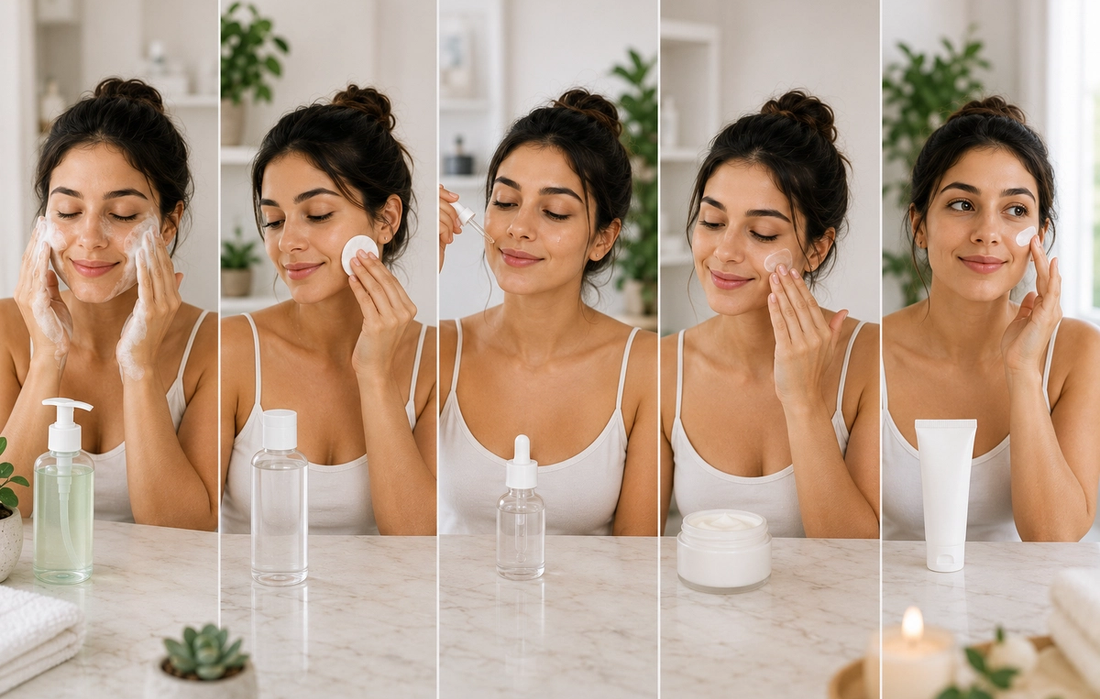
Walk into any beauty store or spend five minutes on social media, and it’s easy to believe that healthy skin requires a shelf full of expensive products. New serums, masks, acids, oils, and treatments appear almost daily, each promising brighter, smoother, or younger-looking skin. It’s no wonder many people feel overwhelmed before they’ve even started.
The truth is much simpler.
A good skincare routine isn’t about using the most products—it’s about using the right ones consistently. In fact, many dermatologists agree that a simple routine followed every day is often more effective than an elaborate routine that’s impossible to maintain.
Whether you’re completely new to skincare or looking to simplify your current routine, understanding the basics can help you build habits that actually work over the long term.
Step 1: Start with a gentle cleanser
Every skincare routine begins with clean skin.
Throughout the day, your face collects oil, sweat, sunscreen, pollution, makeup, and other impurities. A gentle cleanser removes these without stripping away the skin’s natural protective barrier.
The key word is gentle. Cleansers that leave your skin feeling tight or squeaky clean may actually be removing too much natural oil, leading to dryness or irritation.
In the morning, a light cleanse helps remove overnight oil and sweat. In the evening, cleansing becomes even more important because it removes sunscreen, makeup, and the dirt that has accumulated throughout the day.
Choose a cleanser that matches your skin type rather than one that promises dramatic results.
Step 2: Moisturize every day
One of the biggest skincare myths is that only people with dry skin need moisturizer.
In reality, every skin type benefits from proper hydration.
A moisturizer helps strengthen the skin barrier, reducing moisture loss while protecting the skin from environmental stress. Even oily skin can become dehydrated, and skipping moisturizer sometimes causes the skin to produce even more oil to compensate.
Lightweight gel moisturizers often work well for oily or combination skin, while richer creams may be better suited to dry skin.
The best moisturizer isn’t necessarily the most expensive one—it’s the one you’ll actually use every day.
Step 3: Never skip sunscreen
If there is one skincare product that experts consistently recommend above all others, it’s sunscreen.
Sun exposure is one of the leading causes of premature skin aging. Fine lines, wrinkles, dark spots, and uneven skin tone often develop gradually after years of ultraviolet (UV) exposure. More importantly, sunscreen also helps reduce the risk of skin cancer.
Even on cloudy days, UV rays can reach your skin.
Applying a broad-spectrum sunscreen with an SPF of at least 30 every morning is one of the simplest and most effective things you can do for your skin. If you’re spending extended time outdoors, remember to reapply it throughout the day.
No serum or anti-aging cream can fully replace the protection sunscreen provides.
Step 4: Add targeted treatments only if you need them
Once you’ve established a consistent routine with cleansing, moisturizing, and sunscreen, you can consider adding products that target specific concerns.
For example, vitamin C is commonly used to brighten the complexion and help protect against environmental damage. Retinoids are well known for improving signs of aging and acne over time. Ingredients such as niacinamide can help reduce redness and support the skin barrier, while hyaluronic acid provides additional hydration.
The mistake many people make is introducing several active ingredients at once.
Adding products gradually makes it much easier to identify what works for your skin and reduces the likelihood of irritation.
Remember that skincare is rarely about using more products—it’s about choosing products with a clear purpose.
Step 5: Give products time to work
Many skincare products don’t produce visible results overnight.
It’s common to expect dramatic improvements after just a few days, but healthy skin changes gradually. Cell turnover naturally takes several weeks, meaning noticeable improvements often require patience.
Retinoids may take several months before showing their full benefits. Products designed to improve pigmentation or reduce fine lines also require consistent use over time.
Switching products too frequently often prevents you from knowing whether something was actually effective.
Consistency almost always matters more than speed.
Avoid making common skincare mistakes
One of the easiest ways to damage your skin is by trying to do too much.
Over-exfoliating, combining multiple active ingredients without understanding how they interact, or constantly changing products can irritate the skin and weaken its natural barrier.
Another common mistake is following trends without considering your individual skin type.
A product that works wonderfully for someone else may not be the right choice for you. Skin is highly individual, influenced by genetics, age, environment, hormones, and lifestyle.
Rather than chasing every new trend, focus on building a routine that suits your own needs.
Healthy skin depends on more than products
Although skincare products play an important role, they’re only one part of the picture.
Getting enough sleep, eating a balanced diet, managing stress, staying hydrated, avoiding smoking, and protecting your skin from excessive sun exposure all contribute to healthier skin over time.
Stress, lack of sleep, and dehydration often appear on the skin long before we notice them elsewhere.
A good skincare routine works best when it’s supported by healthy everyday habits.
Build a routine you can actually maintain
The most effective skincare routine isn’t the one with the most expensive products or the longest list of steps.
It’s the one you can realistically follow every day.
For most people, a gentle cleanser, a suitable moisturizer, and daily sunscreen provide an excellent foundation. Additional products can be added gradually if they address specific concerns, but they should never replace the basics.
Healthy skin isn’t achieved through perfection or overnight transformations. It’s built through small, consistent habits repeated over months and years.
In the end, skincare is less about chasing flawless skin and more about taking care of the skin you have. With a simple routine, a little patience, and realistic expectations, you’ll often achieve better results than by constantly searching for the next miracle product.








MORE IN TRENDING
How to Find Your Personal Style in 6 Steps
Sam Bitton .
How to Spot a Beauty Product That’s Actually Worth the Hype
Adi Liad .

The Privacy Settings Worth Changing on Every Device You Own
Roy Kaden Roi .

How to Spend Less Time on Your Phone Without Going Off-Grid
Roy Kaden Roi .

The Digital Habits of People Who Seem Calm Online
Jade Josef .