
The Apps Worth Paying For (And the Ones to Cancel)
By Adi Liad on July 3, 2026
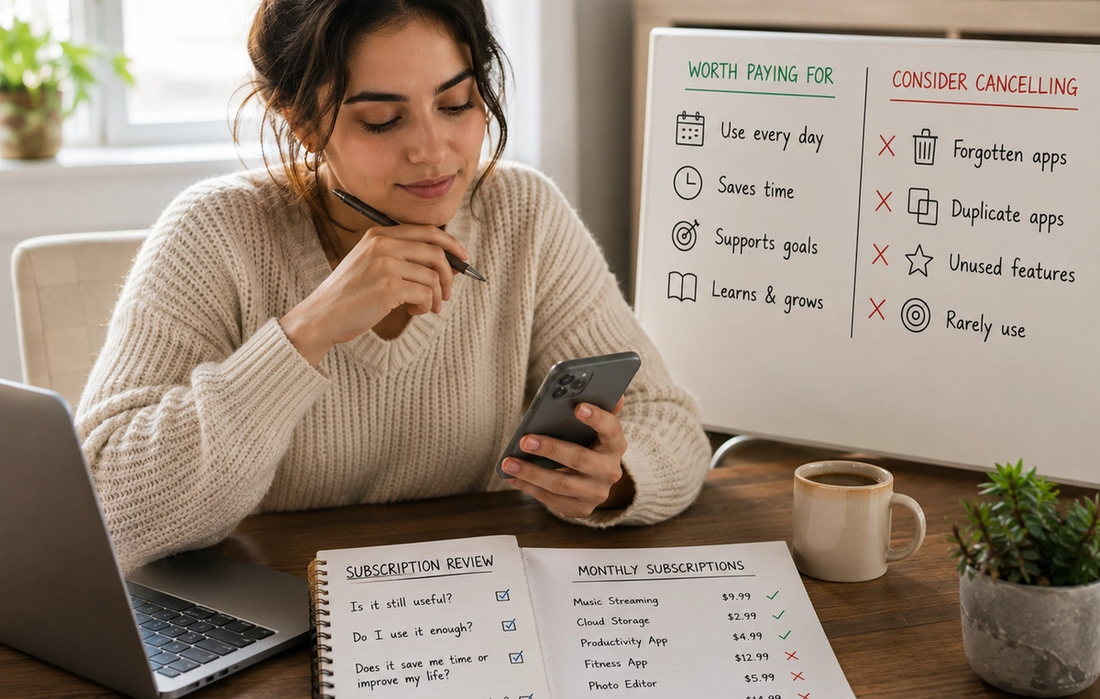
Subscription apps have quietly become part of everyday life.
A few pounds or dollars here, another monthly payment there, and before long it’s easy to lose track of how many services you’re paying for. Music streaming, cloud storage, fitness apps, productivity tools, photo editing software, meditation platforms, meal planners, language learning apps—the list keeps growing.
None of these subscriptions seem particularly expensive on their own.
The problem is that dozens of small monthly payments can quietly become one of the biggest recurring expenses in your budget. That’s why it’s worth asking a simple question every so often: Which apps genuinely improve my life, and which ones am I paying for out of habit?
The answer may surprise you.
Worth paying for: Apps you use every day
The best subscriptions are usually the ones that become part of your daily routine.
If you listen to music for hours each day, use cloud storage for work, rely on a calendar app to stay organized, or regularly use a navigation app while travelling, paying for additional features can be worthwhile.
The key is frequency.
An app that saves you time or improves your daily life every single day often provides excellent value, even if the monthly fee seems higher than average.
Regular use almost always justifies a subscription more than occasional use.
Worth paying for: Tools that save you time
Time is often more valuable than money.
Some paid apps automate repetitive tasks, organize notes across multiple devices, simplify teamwork, edit photos professionally, or help manage finances more efficiently. If a subscription consistently saves you hours every month, it’s often money well spent.
Before paying, ask yourself whether the app solves a genuine problem or simply adds another tool you’ll rarely open.
The best subscriptions quietly make life easier without demanding constant attention.
Worth paying for: Learning and personal growth
Some subscriptions are investments rather than expenses.
Language learning platforms, educational courses, professional development tools, audiobook services, and digital libraries can continue providing value long after the monthly payment is forgotten.
The important distinction is whether you’re actually using them.
A learning app that helps you practice several times a week can be incredibly worthwhile. The same subscription becomes far less valuable if you haven’t opened it for months.
Knowledge only becomes valuable when it’s used.
Consider cancelling: Apps you forgot existed
One of the easiest ways to reduce monthly expenses is simply reviewing your existing subscriptions.
Many people continue paying for apps they downloaded during a free trial, used for one project, or intended to explore “later.”
Take a few minutes to scroll through your recurring payments.
If you don’t immediately recognize a subscription or can’t remember the last time you used it, it’s probably worth reconsidering whether it still deserves a place in your budget.
Sometimes the easiest money to save is the money you’re already spending without realizing it.
Consider cancelling: Apps that duplicate each other
It’s surprisingly common to pay for several apps that perform almost the same function.
Perhaps you subscribe to multiple cloud storage services, several fitness platforms, two note-taking apps, or multiple streaming services even though you mainly use one.
Whenever possible, choose the service that best fits your needs and let the others go.
Reducing overlap not only saves money but also makes your digital life simpler and easier to manage.
More apps don’t always create a better experience.
Don’t pay for features you don’t need
Many apps offer premium versions with dozens of additional features.
Before upgrading, ask yourself whether you’ll genuinely use them.
Sometimes the free version already provides everything you need. Other times, the premium features solve a specific problem that makes upgrading worthwhile.
Paying for potential rather than actual use is one of the easiest ways subscriptions quietly become unnecessary expenses.
Choose subscriptions based on your current habits—not the person you hope to become someday.
Review your subscriptions regularly
One of the healthiest financial habits is scheduling a subscription review every few months.
Needs change.
The app that was essential last year may no longer fit your routine today. Likewise, a new job, hobby, or project may make another subscription much more valuable than it used to be.
Rather than letting subscriptions renew automatically forever, treat them like any other financial decision.
Regular reviews help ensure your spending continues to match your priorities.
Think in yearly value, not monthly cost
Subscription prices often look small because they’re presented as monthly payments.
Five or ten pounds doesn’t seem like much.
However, multiplying that amount across an entire year—and across several different services—can reveal a surprisingly large expense.
Before subscribing, calculate the annual cost and ask yourself whether the app is likely to provide that amount of value over the next twelve months.
Looking at the bigger picture often leads to more thoughtful decisions.
The best apps earn their place
Subscriptions aren’t inherently good or bad.
Some genuinely improve our lives by saving time, helping us learn, supporting our work, or making everyday tasks easier. Others quietly continue charging us long after we’ve stopped noticing they exist.
The goal isn’t to cancel every subscription.
It’s to make sure every recurring payment has a clear purpose.
If an app consistently supports your daily life, helps you reach important goals, or provides real enjoyment, it’s probably worth keeping. If not, there’s nothing wrong with letting it go.
In the end, the smartest subscriptions aren’t always the cheapest ones.
They’re the ones that continue delivering value month after month. And sometimes, the best financial decision isn’t finding another app to pay for—it’s remembering to cancel the ones you no longer need.







MORE IN TRENDING
How to Find Your Personal Style in 6 Steps
Sam Bitton .
How to Spot a Beauty Product That’s Actually Worth the Hype
Adi Liad .
The Privacy Settings Worth Changing on Every Device You Own
Roy Kaden Roi .

How to Spend Less Time on Your Phone Without Going Off-Grid
Roy Kaden Roi .

The Digital Habits of People Who Seem Calm Online
Jade Josef .