
The Difference Between Toner, Serum, and Moisturizer (Explained Simply)
By Eitan Ree on July 3, 2026
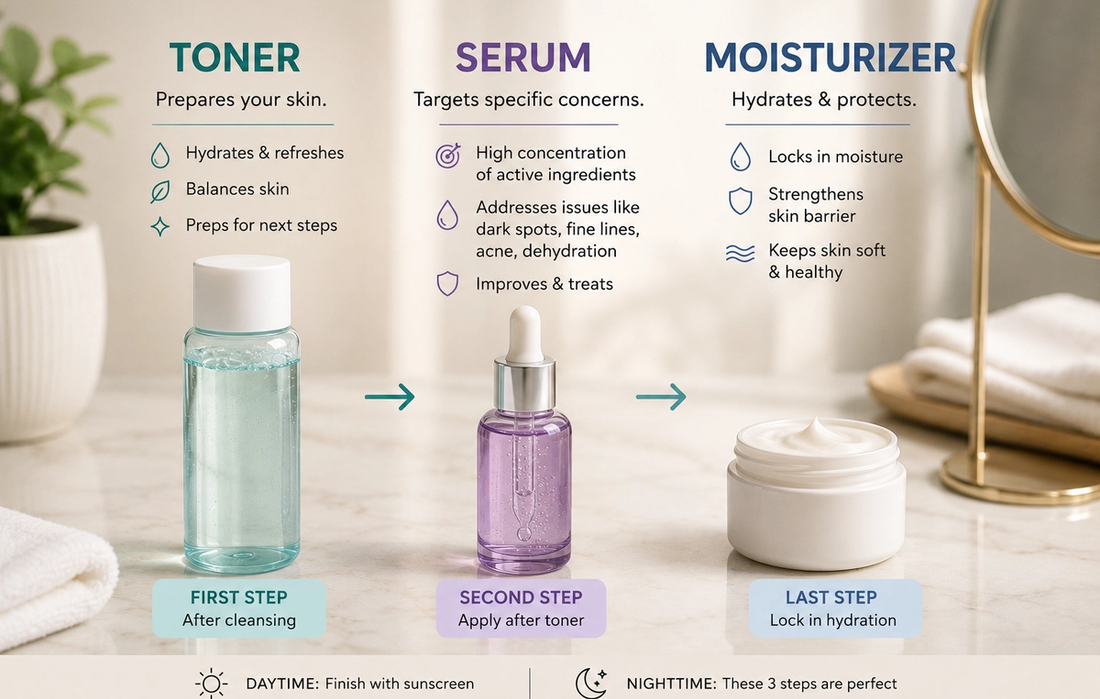
Walk down the skincare aisle or spend a few minutes watching beauty videos online, and you’ll quickly come across products with names like toner, serum, and moisturizer. For someone new to skincare, it’s easy to wonder whether all of them are necessary—or whether they do the same thing.
The truth is that each product has a different purpose.
While they often work together as part of a skincare routine, they’re designed to do different jobs. Understanding what each one does makes it much easier to choose products that suit your skin instead of buying items simply because they’re popular.
The good news is that you don’t need a complicated routine to have healthy skin. Knowing the role of these three products is often enough to build a simple, effective routine that works.
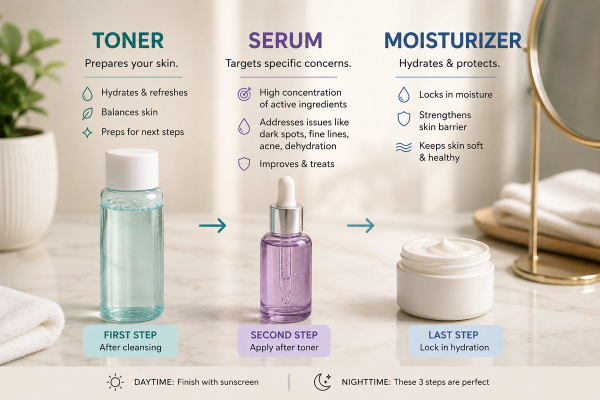
Toner prepares your skin
A toner is usually the first product applied after cleansing.
Years ago, many toners contained high amounts of alcohol and were mainly used to remove leftover oil or cleanser from the skin. Modern toners are very different. Most are designed to hydrate, soothe, or gently prepare the skin for the products that follow.
Depending on the ingredients, a toner may help replenish moisture, calm redness, or provide light exfoliation. Some contain ingredients like glycerin or hyaluronic acid to increase hydration, while others include mild exfoliating acids that help improve skin texture.
Not everyone needs a toner, but for people with dry, dehydrated, or uneven skin, it can provide an extra layer of hydration and make the rest of the routine feel more comfortable.
Serums target specific skin concerns
If toner prepares the skin, a serum is designed to solve a particular problem.
Serums contain higher concentrations of active ingredients than most moisturizers, allowing them to target concerns such as dark spots, fine lines, dehydration, acne, or uneven skin tone.
Different serums serve different purposes.
A vitamin C serum is often used to brighten the complexion and help protect against environmental damage. Hyaluronic acid attracts moisture to the skin, making it feel plumper and more hydrated. Niacinamide may help reduce redness, control excess oil, and strengthen the skin barrier. Retinoid serums are commonly used to improve signs of aging and acne over time.
Because serums are concentrated, you usually need only a small amount. Choosing one that matches your skin’s biggest concern is often more effective than layering multiple serums together.
Moisturizer protects and hydrates
A moisturizer is the product that helps lock everything in.
Its main role is to hydrate the skin while strengthening the skin’s natural barrier. Healthy skin naturally loses moisture throughout the day, and a moisturizer helps slow that process by creating a protective layer on the surface.
Many people think moisturizers simply add water to the skin, but they also help keep existing moisture from escaping. That’s why they’re recommended for almost every skin type—even oily skin.
The right moisturizer depends on your individual needs. Lightweight gel formulas often suit oily or combination skin, while richer creams provide additional nourishment for dry skin.
No matter which type you choose, consistency is more important than complexity.
Do you need all three?
One of the biggest misconceptions in skincare is that more products automatically lead to better results.
In reality, many people achieve excellent results with only a cleanser, moisturizer, and sunscreen.
A toner and serum can certainly improve a routine, but they aren’t essential for everyone.
If your skin feels healthy and comfortable without a toner, there’s no need to add one simply because someone else uses it. Likewise, a serum is most helpful when you have a specific concern you’d like to address.
The best skincare routine is one that’s tailored to your own skin—not one that follows every trend.
Which order should you apply them?
If you decide to use all three products, the order is quite simple.
After cleansing your face, apply toner first because it has the lightest consistency. Next comes your serum, allowing its active ingredients to absorb into the skin. Finish with moisturizer to lock in hydration and help protect the skin barrier.
During the daytime, sunscreen should always be the final step in your skincare routine.
A helpful rule is to apply products from the thinnest consistency to the thickest. This allows each product to absorb properly before the next one is applied.
More products don’t always mean better skin
It’s easy to believe that healthy skin requires an elaborate ten-step routine.
In reality, using too many products can sometimes cause irritation, especially when several active ingredients are combined without understanding how they interact.
Introducing new products gradually allows you to see how your skin responds and reduces the risk of unnecessary sensitivity.
Healthy skin is usually the result of consistency rather than constantly trying the latest trend.
Simple routines are often easier to maintain—and that’s what makes them effective.
Understanding your skin matters most
No two people have exactly the same skin.
Factors such as age, genetics, climate, hormones, and lifestyle all influence what your skin needs. A product that works perfectly for one person may not produce the same results for someone else.
Instead of asking which product is the “best,” it’s more useful to ask which product solves your particular concern.
Choosing skincare with that mindset leads to better decisions and a much less confusing shopping experience.
Keep it simple and consistent
Skincare doesn’t have to be complicated.
Toner prepares the skin, serum targets specific concerns, and moisturizer hydrates while protecting the skin’s natural barrier. Each product has its own purpose, but not every routine needs every step.
The most effective skincare routine is one you can follow consistently. A few well-chosen products used every day will almost always produce better results than a complicated routine that’s difficult to maintain.
At the end of the day, healthy skin isn’t about owning the most products. It’s about understanding what your skin needs and giving it consistent care over time.







MORE IN TRENDING
How to Find Your Personal Style in 6 Steps
Sam Bitton .
How to Spot a Beauty Product That’s Actually Worth the Hype
Adi Liad .

The Privacy Settings Worth Changing on Every Device You Own
Roy Kaden Roi .

How to Spend Less Time on Your Phone Without Going Off-Grid
Roy Kaden Roi .

The Digital Habits of People Who Seem Calm Online
Jade Josef .