
Mental Health Takes Center Stage: Building Resilience in 2026
The article discusses building mental health resilience in teens during 2026, highlighting the importance of awareness, school programs, workplace resources, digital tools, and parental involvement. It emphasizes that 1 in 5 adolescents experience mental health issues, with 70% of schools now incorporating mental health education. The piece calls for collective action from schools, communities, workplaces, and families to support teen mental well-being.
By Mia Pazz Maya on February 16, 2026
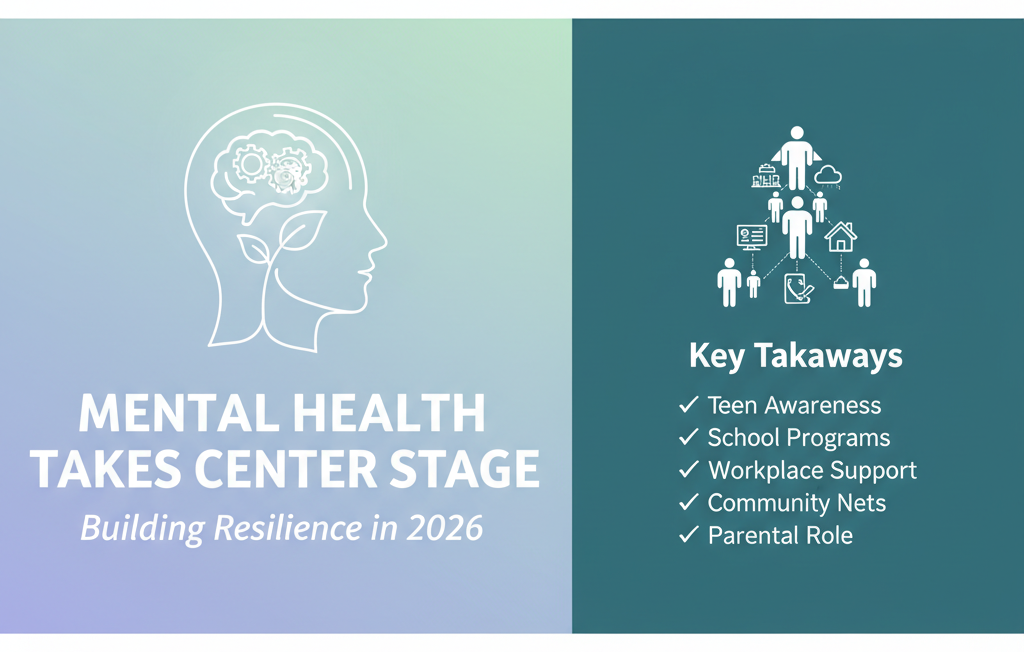
Mental Health Takes Center Stage: Building Resilience in 2026
As we dive into 2026, the conversation surrounding mental health has shifted from whispers to a resounding call for action. The pandemic's shadow continues to loom large, bringing mental health to the forefront of public discourse. For teens navigating this tumultuous landscape, building resilience is not just beneficial; it's essential for their well-being.
Key Takeaways
- Mental health awareness is critical for teens: Studies show that 1 in 5 adolescents experience mental health issues, emphasizing the need for targeted support.
- Resilience programs are being implemented in schools: 70% of schools now incorporate mental health education into their curricula, fostering emotional intelligence.
- Workplace mental health resources are vital: Companies like Calm Health connect employees to mental health resources, creating a supportive work environment.
- Community support systems play a crucial role: Local initiatives are emerging to provide resources and support networks for teens and families.
- Digital tools are enhancing mental health access: Mobile apps and online platforms are offering immediate assistance, making it easier for teens to seek help.
- Parental involvement is essential: Engaged parents can significantly impact their children's resilience by fostering open conversations about mental health.
- Cultural shifts towards openness are occurring: As stigma decreases, more teens are willing to discuss their mental health challenges and seek help.
Understanding the Landscape of Teen Mental Health
Mental health among teens is a pressing issue that demands immediate attention. With the rise of social media, academic pressures, and global crises, adolescents face unique challenges that can lead to anxiety, depression, and other mental health disorders. According to recent studies, nearly 20% of teens experience significant mental health issues, a statistic that highlights the urgent need for intervention and support systems.
In 2026, the focus has shifted towards resilience-building programs that empower teens to navigate these challenges with confidence. Schools across the country are integrating mental health education into their curricula, teaching students essential skills like emotional regulation, stress management, and problem-solving. These programs not only foster emotional intelligence but also create an environment where mental health discussions are normalized.
The Role of Schools and Communities
Schools have become pivotal in addressing mental health by creating safe spaces for students to express their feelings. Programs designed to build resilience are now prevalent, with 70% of educational institutions implementing these initiatives. By equipping teens with coping strategies and resources, schools can play an instrumental role in shaping a generation that values mental well-being.
Moreover, community support systems are emerging as essential lifelines for teens and their families. Local organizations are stepping up to provide resources and create networks for support. Whether through after-school programs, counseling services, or peer support groups, communities are recognizing the need for collective action in promoting mental health.
Workplace Mental Health Resources
Interestingly, the conversation around mental health is also extending beyond schools into the workplace. Companies are beginning to understand that employees’ mental health is as crucial as their physical health. Organizations like Calm Health are making strides by connecting employees with mental health resources, guiding them to the support they need. This shift is not just beneficial for employees; it also enhances workplace productivity and morale.
Investing in mental health resources is proving to be a smart business move. According to recent reports, businesses that prioritize mental health see a 30% increase in employee satisfaction and a 25% reduction in absenteeism. It’s a win-win situation that underscores the importance of mental health in all aspects of life.
The Digital Age: Tools for Immediate Assistance
Digital tools are revolutionizing access to mental health support. Mobile apps and online platforms offering therapy, mindfulness training, and peer support are making help more accessible than ever. In 2026, these resources are being tailored specifically for teens, recognizing their unique needs and preferences.
Platforms that provide immediate assistance enable teens to seek help discreetly and conveniently. With just a few taps, they can connect with therapists or access self-help resources. This immediacy is crucial in a world where delays in seeking help can have serious consequences.
The Importance of Parental Involvement
However, the role of parents cannot be understated. Engaged parents who foster open conversations about mental health create an environment where teens feel safe to express their concerns. Research indicates that when parents actively participate in their children's mental health journey, teens are more likely to seek help and develop resilience.
Conclusion: A Call to Action
As we move through 2026, the focus on mental health is not just a trend; it’s a necessary evolution in our society. Building resilience in teens requires a collective effort from schools, communities, workplaces, and families. Each of these entities holds the power to create an environment where mental well-being is prioritized and nurtured.
The challenge lies in continuing this momentum. Let’s commit to fostering a culture of openness and support, ensuring that the next generation is equipped not only to face challenges but to thrive in the face of them. Mental health is not just an individual concern; it’s a societal imperative. Together, we can make a difference, one resilient teen at a time.



MORE IN TRENDING

Useful gifts that don’t create clutter - Discover Lifestyle
It’s time to give gifts, and many of us find ourselves asking the same question: what would you like? It can be tough to answer when it often feels as though you already have anything you need. But we want to give a gift. What are we supposed to do? Thankfully, these useful gifts that […]
Adi Liad .
Getting hair extensions for the first time - what you need to know
If you’ve always dreamed of luscious locks but don’t want to wait too long, then hair extensions are the perfect option. They can help hair look healthy, vibrant, denser, and of course, longer. Some people really struggle to grow their hair, whether it’s from heat damage, color damage, or maybe it’s just having the freedom […]
Mia Pazz Maya .

Useful gifts that don’t create clutter - Discover Lifestyle
It’s time to give gifts, and many of us find ourselves asking the same question: what would you like? It can be tough to answer when it often feels as though you already have anything you need. But we want to give a gift. What are we supposed to do? Thankfully, these useful gifts that […]
Adi Liad .

Getting hair extensions for the first time - what you need to know - Discover Lifestyle
If you’ve always dreamed of luscious locks but don’t want to wait too long, then hair extensions are the perfect option. They can help hair look healthy, vibrant, denser, and of course, longer. Some people really struggle to grow their hair, whether it’s from heat damage, color damage, or maybe it’s just having the freedom […]
Mia Pazz Maya .

Useful gifts that don’t create clutter - Discover Lifestyle
It’s time to give gifts, and many of us find ourselves asking the same question: what would you like? It can be tough to answer when it often feels as though you already have anything you need. But we want to give a gift. What are we supposed to do? Thankfully, these useful gifts that […]
Adi Liad .